
Artistic Team Building
Art works as a cohesion tool for one simple reason: everyone starts from zero. Nobody arrives with an advantage, and whatever comes out of the session is built together.
Our artistic team building activities
Three creative formats: collaborative painting, graffiti and Art & Wine. Pick the one that fits your team and the moment of the event.
GRAFFITI
- Sprays and canvases · materials included
- Ask us about format and duration
What artistic team building brings to a team
Artistic team building has one advantage the other categories don’t: it leaves something behind. At the end of the session there isn’t only a shared feeling, there are finished pieces. Each participant takes theirs home, or the collective mural stays up in the office, still telling the story of that day months later.
It is also the most accessible category in our catalogue. No drawing skills are needed and no one has to have painted before: the format is built to move step by step from the first strokes to a finished collective piece. That is why it works particularly well with technical teams, with quieter profiles, and with groups that differ widely in age, culture or language, where a highly exposed activity leaves half the room out.
We are not an agency that subcontracts. We are artists and facilitators.
We have spent 20 years designing and running experiences for companies, and we run them ourselves: whoever facilitates the session is the person who designed it. There is no middleman, no different supplier each time, and no closed formula applied the same way to every group.
That changes very practical things. We pick the format from the real objective of the event, we adjust the intensity to the group in front of us, and we solve the logistics on our own judgement, because we have solved it hundreds of times.
Why choose an artistic activity for your company
It leaves something physical behind
When it ends there are finished pieces, not just a good feeling. Each participant takes theirs, or they stay up in the office, where they keep bringing the day back. That is the difference between telling people you did something together and seeing it every morning.
It is a universal language, with no barriers
Painting asks for no shared language and no shared cultural references. In multinational teams, or in teams with a wide age range, that removes at a stroke the barrier that any talking-based activity carries.
It is safe ground for every profile
Nobody is left exposed in front of the group. People work seated, with their hands, at their own pace, and the result is not judged. That is why the people who normally step back from team activities take part in this one.
What kind of teams fit this category best
Creative teams: agencies, marketing and design
They are used to producing ideas, but almost never with their hands and almost never at the same time as everyone else. Collaborative painting sets them a challenge they recognise and which, at the same time, pulls them out of their usual way of working.
Teams diverse in age, culture or language
This is where the advantage of the category shows most: the activity does not depend on speaking the same language or sharing the same references, so nobody is left out for that.
Technical teams and quieter profiles
Engineering, IT, laboratory, back office. The profiles that avoid stage-based activities find a natural channel here: concrete work, a tangible result, and nothing to improvise in front of everyone else.
//Artistic team building experiences adapted to every team
Let’s talk about your next event
Not every group is after the same thing. Some need to slow down and concentrate; others want to walk out with something they made together and hang it in the office the next day. Tell us how many of you there are, when the event is and what you want to happen in the room, and we will propose the format that fits.
If you would rather talk it through, we will help you shape the activity on a free video call.
- Spain
- 660 649 287
- info@drumteambuilding.com
Frequently asked questions about artistic team building
Do we need to know how to draw or paint?
No. The activities are designed so that any group, even with no previous artistic experience, moves step by step from the first strokes to a finished piece. They work especially well with teams that have never done anything like it.
What is the difference between painting, graffiti and Art & Wine?
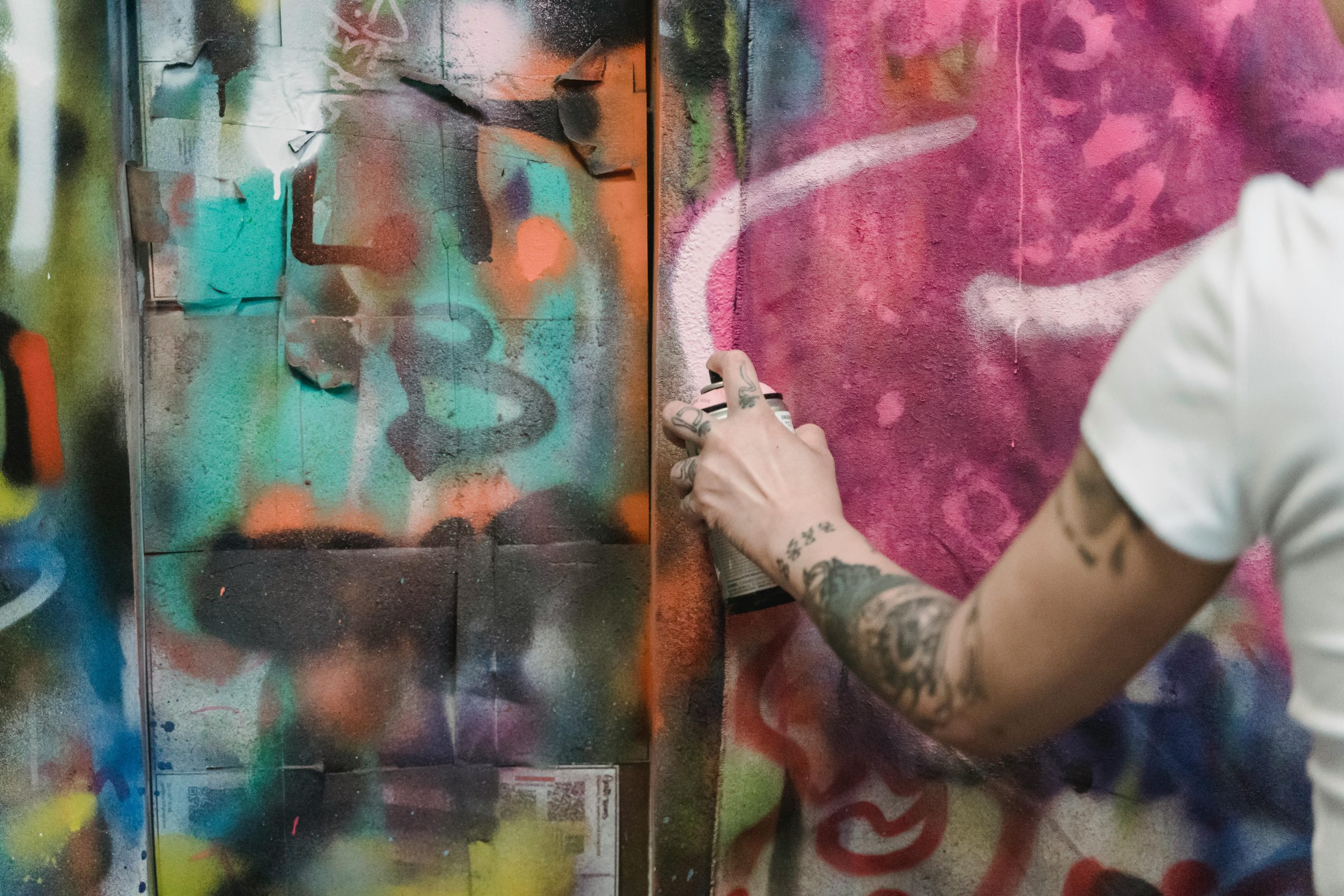
Painting is the most developed format and comes in four variants depending on the objective: cubism, collaborative mural, guided painting and free interpretation. Graffiti is worked with spray cans on large canvases, and the materials — sprays, canvases, overalls, gloves and masks — are included. Art & Wine is still being finalised: write to us and we will tell you the exact format.
Does it work for large groups?
Painting runs from 20 to 100 people. Above that it can be considered, but it is worth talking first: both the space logistics and the number of facilitators change.
Can we do it at our office?
Yes, if there is room. We count on 2 m² per participant as a minimum, good light and adequate ventilation. We bring the tables or easels if there are none. We recommend indoors for two concrete reasons: control of the light, which matters for seeing true colours, and protecting the pieces from the wind.
What happens to the pieces at the end?
In cubism, guided painting and free interpretation each participant takes their own piece home, and we provide bags to carry it. In the collaborative mural there is a single piece and it usually stays in the office. We also offer optional professional framing. Bear in mind that acrylics dry fast, but it is worth leaving 30-40 minutes before moving anything.
How much does it cost?
From €550. The final price depends on the number of participants, the format, the city and whether the team has to travel. Ask us for a proposal and we will send it with the breakdown.
How is this different from any art workshop?
In the objective and in who runs it. A workshop teaches a technique; here the technique is the means for the team to work together and walk out with something they made. And it is facilitated by the same artists who designed it, not by a subcontracted supplier.
Would you recommend it for technical teams?
Yes, it is one of the categories where it works best. Technical or more reserved profiles tend to find a natural channel in hands-on work, without the exposure a stage-based activity demands.